Cast-Iron Steak With a Steakhouse Crust
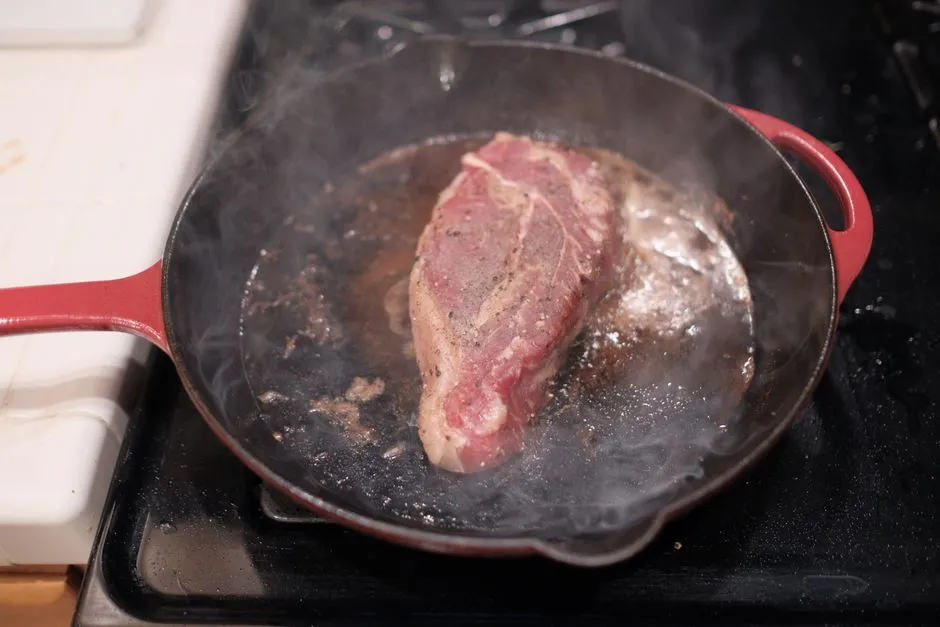
Cast-iron steak, measured by the center
This cast-iron steak recipe uses a hard stovetop sear, a short oven finish, and a thermometer to build a dark steakhouse-style crust while cooking the center safely. It serves two and works best with steaks 1 to 1½ inches thick. The clock offers checkpoints; the thermometer makes the call.
For intact beef steaks, current U.S. food-safety guidance sets a minimum internal temperature of 145°F (63°C), followed by at least a three-minute rest. This recipe follows that standard. If you choose different doneness guidance, understand that preference does not replace the published safety minimum, especially for higher-risk diners.
Ingredients for two servings
- 2 intact beef steaks, 1 to 1½ inches thick, about 10 to 12 ounces each
- ¾ teaspoon fine salt
- ½ teaspoon freshly ground black pepper
- 1 tablespoon neutral high-heat cooking oil
- 2 tablespoons unsalted butter
- 2 garlic cloves, lightly crushed but still in their skins
- 2 small thyme or rosemary sprigs, optional
Check the label for mechanically tenderized, blade-tenderized, or needle-tenderized beef and follow its validated package cooking instructions. Do not wash raw steak; splashing can spread contamination around the sink and kitchen.
Equipment
Use a 10- to 12-inch oven-safe cast-iron skillet, tongs, an instant-read food thermometer, a plate, and oven mitts. A splatter screen is helpful if it does not trap enough steam to soften the crust.
The skillet handle will remain hot after the pan leaves the oven. Keep a dry mitt over it or use a heat-safe handle cover. A bare cast-iron handle has an excellent memory and no sympathy.
Dry, season, and preheat
Pat the steaks thoroughly dry with paper towels and discard the towels immediately. Season all sides evenly with the salt and pepper. For deeper seasoning and a drier surface, place the steaks uncovered on a rack in the refrigerator for 30 to 45 minutes, then blot again. Otherwise, season immediately before cooking.
Set an oven rack in the middle and heat the oven to 400°F (204°C). Heat the dry skillet over medium-high heat for 3 to 5 minutes, until it is hot but not producing heavy smoke. Turn on ventilation.
Add the oil and swirl. It should shimmer promptly. If it smokes aggressively, reduce the heat and let the pan settle rather than conducting dinner through a fog bank.
Sear without constantly moving the steak
Lay the steaks in the skillet away from you. They should have space between them; cook in batches if the pan is crowded. Sear the first broad side for about 2 minutes without sliding it around. Flip and sear the second side for about 2 minutes.
Use tongs to hold the fat edge against the pan for 30 to 60 seconds if the cut has a thick fat cap. Return the steaks to a broad side. Reduce heat to medium, add butter, garlic, and herbs, and carefully spoon foaming butter over the top for 30 seconds. Butter can burn, which is why it arrives after the initial sear rather than auditioning for charcoal.
Raw-meat tongs can transfer contamination. Wash them before they touch cooked steak, or switch to a clean pair.
Finish in the oven and use a thermometer
Move the skillet to the 400°F oven. Begin checking the center after 3 minutes; thicker or colder steaks may need substantially longer. Insert the thermometer from the side into the thickest portion so the sensing area reaches the center, avoiding bone and large pockets of fat.
Continue cooking and checking at short intervals until every steak reaches at least 145°F (63°C) before it leaves the heat. Pan, oven, thickness, shape, bone, starting temperature, and fat all change the time. Color, firmness, and juice are not reliable safety measurements.
Transfer the steaks to a clean plate. Rest at least 3 minutes before slicing or serving. Do not return them to the raw-meat plate.
Turn the fond into dinner
While the steak rests, the browned layer in the skillet can become peppercorn pan sauce. Pour off excess fat carefully, preserve the brown bits, and remember that the pan and handle are still oven-hot.
If serving without sauce, spoon over a little of the browned butter that has not burned. Slice against the visible direction of the muscle fibers for shorter, easier-to-chew strands, or serve whole. See more steak technique for carving and timing principles.
Storage and reheating
Refrigerate steak and other perishable leftovers within two hours, or within one hour when the ambient temperature is above 90°F (32°C). Use shallow containers. Reheat leftovers to 165°F (74°C), measured in the center, and discard food left out beyond the applicable limit.
The recipe succeeds when the pan creates the crust and the thermometer verifies the center. No thumb test, calendar phase, or steakhouse stare can do both jobs.